Tuesday, December 8, 2009

Mannasmann on Dickmann


Finally we are moving.
Our new office is at 19 Dickmann St, Richmond.

Goodbye to chair fights, drum practice and
the smell of pizza in the afternoon.

Hello to 5 secured years of on-going innuendo.

fluffy white cloud


almost complete...
see july for early photos

Palmer st - the continuing story


Still more cranes.....

The Prebuilt pod was installed last week at the rear of the Palmer St project.

Palmer st


More cranes, more cranes, more cranes.

This renovation and extension for a family with 3 young boys could not have involved more cranes or trucks if we tried (and we did!).

Initially cranes and diggers were required to relocate an established tree and to dig a hole for the underground water tank. This 27,ooo l concrete tank (being installed in photo) will form the finished floor of the new dining room.

black is the new black


Alternatively described as black is black is black or any colour you like...
this tiny warehouse fitout comprises an entirely black paint job, a black kitchen, new rear window and doors (in black) and a timber crate / bathroom pod. The space, the result of collaboration with interior designer Amanda Lynn, seems to extend beyond it's boundaries and the small number of openings (front and rear windows and 3 tiny skylights) contrast brightly with the inky depths of inside.

Tuesday, July 28, 2009

fluffy white cloud


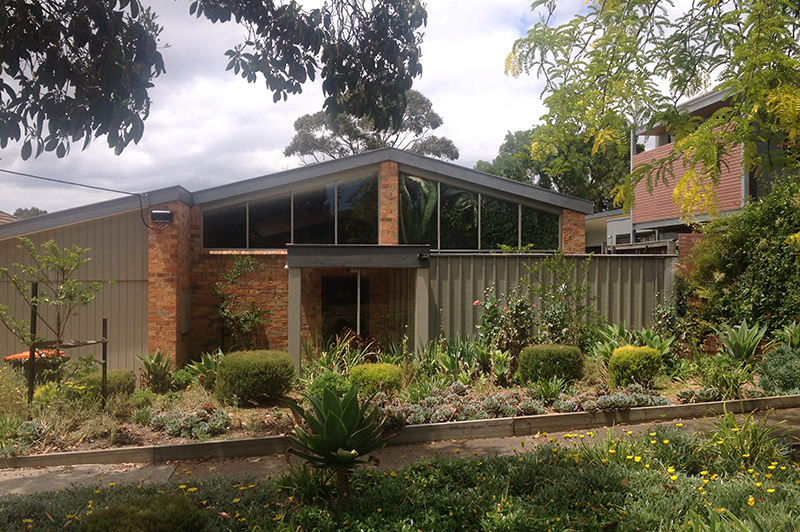
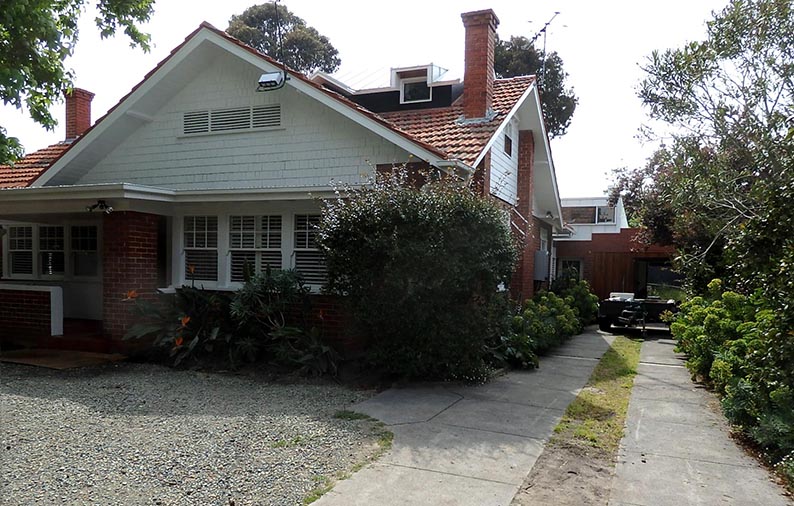
This project preserves and extends the aesthetic and built qualities that are present in this example of queen anne style pattern housing. It reconfigures the durable elements of the dwelling. Hovering above the retained bricks and separated by a band of glazing is a fluffy white cloud roof.

Eco-Cubby update


The drawings and final model for the eco-cubby project we are doing with Jon Pye Architects. See below for early sketch models. Click here for eco-cubby webiste.

Cardboard study model


A study model for a 2 storey extension at the rear of a semi-detached house.

Thursday, June 11, 2009

Preston Shed. The Polished Presentation


The project extends the strategy and ingenuity of the north suburban frontier spirit. Here, since the war, the aspirational impulse of everyman has intersected with the homogeny of the built environment.

This small set of external structures can be understood as an exercise in the efficient re-use of found and salvaged materials. Recycled palings have been used to over-clad an existing fence, scavenged floor beams support the shed’s grass roof and it’s cladding is a combination of salvaged fence palings, futon base slats, corrugated iron and fibreglass.

Consisting of a tool shed, bike and bin enclosure, chicken coop and fence, it reintroduces elements commonly found in the Australian backyard. Tectonically the project is a single shed unfurled like a Swiss roll with one part near the side gate, the other at the far corner of the yard and a long fence spread between. The design is conceived as a multi-functional edge, in which provision of a place for everything expands the available space in this modest backyard.

The shed’s grassy roof attempts to mediate between backyard and the tree lined horizon beyond. From the house windows the elevated meadow provides a planted foreground to the Kodak factory rising from above the horizon.

Tuesday, June 9, 2009

Expression of Interest Submission for new Faculty Building at Melbourne University


As some of you will know, we have recently put together a submission for the new Architecture, Building and Planning faculty building at Melbourne University.
Our application was not selected to go to the next round.
Here it is anyway.
To see the short list click
here

Tuesday, May 26, 2009

rembrandts exhibition


Towards the end of November, Rembrandt’s Entertainment Centre briefly reopened its doors to the public. Instead of a floor show, an affordable buffet meal or a debutante’s ball, the drawcard was a newly abandoned restaurant concealing art installations. On display were site-specific installations created by nine Melbourne artists and architectural firms in response to questions of community, civic centre and the place Rembrandt’s held in the cultural memory of Melbourne’s eastern suburbs. The exhibition was part of an ongoing RMIT research project investigating suburban development in the City of Knox.

We have written a review for Architecture Australia. Click here for entire article and pictures.

eco cubbies project with Jon Pye Architects


The eco cubby project is about architects working with primary school students to design and, ultimately build sustainable cubbies. We are working with Jon Pye and the year 5 / 6's from Bundalaguah Primary.

So far we have had 2 trips to the school, with the third happening next week. As a group we have undertaken site analysis and identified a site (by a unanimous vote), in the south west corner of the school yard. The students have also made 1:20 precdent study models of playground equipment at their school and models of themselves. They also made a number of sketch models and a final, consolidated, version. This has been translated into measured drawings and the students will make a 1:10 model of the final design in the coming weeks.

Click here for more information and eco cubby's web page.

Tuesday, May 12, 2009

new Australia pavilion, Venice


Our entry for the
Di Stasio Competition to redesign the Australia pavilion at the Venice Beinnale.
Our pavilion engaged with the expanse of our continent and the red colour of the soils with the undulating copper floor. The tracking of people across it's surface would be evident as the surface patinated in time.
In the water-centric setting it seemed appropriate to reflect on Australian aqua-environments. It seemed too hard to convinvingly provide a beach. Instead we floated a glass bottomed swimming pool above our 'dry brown land'. Part relocated canal, part light filter, this water mass had clear occuli allowing patches of stronger sunlight through into the pavilions interior, reflecting on the harsh Australia light.

Monday, May 11, 2009

Corner block in Fitzroy


Documentation is just ablout to start on this project for a corner block in Fitzroy. The existing house is an unusual building with no windows onto the street. The light comes through skylights and windows onto the south facing garden. These spaces are cool and shaded in summer but in winter the house has limited natural daylight. The new extension provides sunfilled winter spaces and direct views across the existing roofscape. We have employed a language of roof and the new form nestles into the existing valley behind the parapet.
These images are from a computer model made during the design development stage.

Monday, February 16, 2009

Preston Study


New windows, a desk and bookshelf to turn a dark asbestos lean-to into a sunroom with a suburban rooftop view

Monday, November 10, 2008

Fairview Gazebo


Completed in 2005 by 2 swiss carpenters.

Wednesday, October 1, 2008

Maryknoll


Millar Street Pod - Process and Developments


Updated pictures showing the cellar excavation, more of the POD installation (see post below for crane day photos), factory and client process, an exploratory axonometric of the custom elements and on-site photos of the works by Artezen Constructions.

Thursday, September 4, 2008


BEFORE THIS BLOG...
...THERE WAS THE CD


For projects, exhibiton work and competition entries undertaken by our Collective, please see our pdf folio. Copies are avaiable through our office. Please email us: rexroth@rexroth.net.au or phone the office on +613 9419 0622


SERENE HYPER POP

A house in 9 squares.

The overall master planning of this project responds to the 9-square plan of the existing house. The interiors were conceived as a ‘garden of earthly delights’ with each room its own world.
The brief was to transform the family home and to house the owner’s art collection. All wall space was sacred. The variety of room treatments created a variety of hanging and display environments. Vista’s between worlds were carefully constructed and attention was drawn to the physical experience of passing from one world to the next.

Stage One of this project involved painting walls and ceilings in 6 of the 9 squares, replacing light fittings and polishing the floors. New carpet was laid in the upstairs bedrooms, which cascades water-fall-like down the stairs into the centre of the house. Thresholds between worlds were denoted in hot pink.

Future stages will see the completion of the dark central core (laundry and toilet). Additional decoration and texture will be added to the 5 rooms finished in stage 1: mirror and mirrored doors, wallpaper and door mat wall coverings. The 3 rear squares are dedicated to the suburban backyard. A kitchen covered on all surfaces in green rubber will form a bookend with the lawn-green carpeted kid’s cave. In the middle a naturalistic dining area will link to the quintessential outdoor patio complete with hot pink Corinthian feature column.

Monday, September 1, 2008

Venice Biennale


This model, made
for the Australia Stand at the Venice Biennale 2008, abstracts a number of themes explored in residential alterations undertaken by our practice. Traditional architectural model making techniques are combined with domestic and bush crafts, using new (gold wire and boxboard) and recycled (street sweeper blades and beer boxes).

Our built work focuses on the fabric of building and the ritual of habitation. In this model the investigation of 'making' is separated from that of occupation. The inner spindle creates rooms with occupiable edges. it synthesises the connectedness of the modernist open plan with the spatial and social ordering of the Victorian parlour spaces. The golden screen is a technological experiment. It provides a protective skin for the delicate silhouettes, filtering light and mediating views.

For an overview of the exhibition go to: http://www.australbrick.com.au/abundantaustralia/


Friday, August 1, 2008

Newlands Chimneys


Every duplex has a different pair.....
How individuality was created in postwar housing.

Thursday, July 31, 2008

Murrumbeena Material Madness


A series of interventions to make occupiable spaces in an ill proportioned 80's extension. The existing cathedral ceiling unifies new internal elements under one roof. A new shed and a pergola extend the internal experience. Features include: endless wardrobe reflections, a footpath vanity to the ensuite, a backdrop shed with Ned Kelly window, a cruciform column opening the fireplace in 2 directions, a shaped stone chimney, a hidden daybed and a kitchen with colour coded drawers.

Monday, July 7, 2008

Hackett Street, Pascoe Vale


A new 2 storey addition with a shiny metallic skin that reflects the western sun from the Tulla Freeway.

Tuesday, July 1, 2008

Preston Shed


A multifunction drive through shed.
Workbench, toolshed, chicken coop, alley access and a roof garden in 9 square metres.

Garton Street


Explorations in occupiable façades.
A new window seat was inserted into the existing opening to increase useable floor area and provide a place to read the paper in the morning sun.
A new landscape reworked the backyard with a deck, stone seat and battened fence skin.

Thursday, June 19, 2008

Austin Avenue, Elwood


Proto modernist dining box

A box full of bubbles.
The proto modern style that was deployed as it is mid placed between the existing Arts and Craft bungalow of the 1920's and a remanent boxy 1970's extension. The main integrating device was the continuation of materials from both volumes, wrapping the new room in a roughcast render skin externally.
Internally the project is a viewing box for dispersed courtyard spaces, unifying the garden through the selected snippets of view and through occupation of edges.

Wednesday, May 28, 2008

Cliff House

video


A dream house for an improvisional jazz saxophonist who is certain he is going to be famous. The house sits on a cliff in Alsace and contains 50% garden spaces, a pool in the façade and a ramp that tracks the journey from bedroom to practice room following the daily ritual of the musician. The façade opens in 2 glazed skins containing a habitable zone and regulating exposure to the elements.


Oxford Street Apartment Published in Taiwan


Look out for the 'Sweet Home' apartment special next time you are in taiwan

Europan 9 in Milton Keynes


Rexroth and friends (Jon Pye, Simon Ellis, Ashley Conn, Peter Fisher, Grant Dixon, Sophie Herel, Jayne Pickering) have been shortlisted in Milton Keynes for Europan 9. The entry proposed 3 types of housing ordered around public open spaces that amplyfied existing hedges.
Hence the entry was dubbed hedge condition.

The 4 types of hedge:
Building as Giant Order Hedge
The larger housing blocks that face High Street are considered as a giant hedge. The hedge treatment contributes a vertical green edge to this street, reinforcing scale and identifying it as the main ordering artery through the development. In effect it is a green wall, set off the building façade that screens apartments and brings a garden to the upper levels.
Historic Hedge Park
The site’s existing hedge is used to create a verdant backdrop to a proposed linear park in the sun. The Historic Hedge Park provides a north south spine of green space that runs parallel to High Street. The network of East - West roads and green spaces form links between the green spine and the urban spine. A swale picks up water from the road and roofs that abut the park and reed beds filter runoff on site.
Hedge Façade
The hedge façade provides privacy along street frontages and a place for occupation as window seats pop out into the hedge. As the hedge turns corners onto public space it forms screens that define ownership and delineate smaller neighbourhoods.
Hedge Courts
The hedge at the edges of the enclosed courts forms a ring defining the green space for adjoining housing. This hedge is either pollarded or has strategic openings incised in it to provide observation.

3 types of housing:

High Street Apartments
The High Street apartment housing defines the edge to High Street and provides housing types with greater accessibility and adaptability. Street level comprises a mix of double storey row houses and retail/commercial with housing over. The upper levels contain a mix of apartments with large terraces facing the sun. The Hedge filters the street from the apartments within the block. At the scale of a 4 or 5 storey apartment building, lifts become financially viable as do solar panels, basement car parking and water harvesting.
'Portiek’ Houses.
The ‘Portiek’ is a type of house typical in Amsterdam. Here it is adapted to a new context to provide 3 storey housing centred along the Hedge Park. Each home has a door to the street and ground floor houses have a large garden to the rear. Bigger family apartments (4 and 5 bedrooms) are located on ground and can be adapted through incorporation of home offices or retail spaces. The Hedge façade provides privacy to the street and bay windows protrude through the greenery giving outlook to the street. Upper level apartments have large terraces or wintergardens that face the sun.
Courtyard Villas
The courtyard villas draw from the Calverton End scheme by Frost Nicholls. This adaptation of Utzon’s Kingo housing is one of the few types realised in MK that clearly differentiates private open space, and clearly relates it to the street. The one and two storey courtyard villas utilise a 4m stepped section to increase density and provide alternative types. The courtyards always front the street and provide spaces that can be used to park a car or grow vegetables or flowers.

Thursday, May 15, 2008

Miller Street Pod


This project is currently under constrcution.
These are pictures from crane day. Due to difficult site copnditions we needed the 2nd BIGGEST CRANE in VICTORIA!!!!

The living POD is in conjunction with Prebuilt, a prefab company in Melbourne:
http://www.prebuilt.com.au/index.php?action=news
and more pictures of crane day at: http://www.prebuilt.com.au/files/fitzroy_install.pdf
The design is an iteration of the original MOD prototype developed by Pleysier Perkins Architects: http://www.pleysierperkins.com.au/site.html


Sunday, April 6, 2008

Oxford Street Apartment


...........................................................

This project comprised of inserting a kinetic wet function pod into a 3rd generation warehouse subdivision of the Foy and Gibson Buildings. The articulation of this pod was informed by:

- an analysis of habitation requirements;

- material responses to encountered local environments;

- and, an examination of alien objects.

Circumnavigation of the pod reveals a series of adaptations related to habitation activities, either hidden or displayed. Small space planning establishes potential for changeability as hallways become airlocks, desks unfold and beds slide in and out.

The pod’s rich, chocolate coloured exterior utilises regency lining boards, pressed tin and fragments of ‘The Peel Hotel’ carpet to provide a contextual familiarity to the occupant who is intimate with the suburb’s interiors.

A line inscribed in precious reds (the jam) strikes a datum through the white tiled interior. The constancy of the line emphasises both the sectional experience of movement across the changing levels of the pod and provides a reference for the body as it negotiates the various prone, seated and perpendicular attitudes of wet functioning.

As the head moves beneath, through and then above the jam the pod reveals itself to be a lamington.

Dawson Street